“Great open space, tastefully decorated and designed. Expansive Natural Outdoor setting and view. Relaxing environment.“
– Michael, Google Reviewer
A Rustic Venue with a Modern Twist
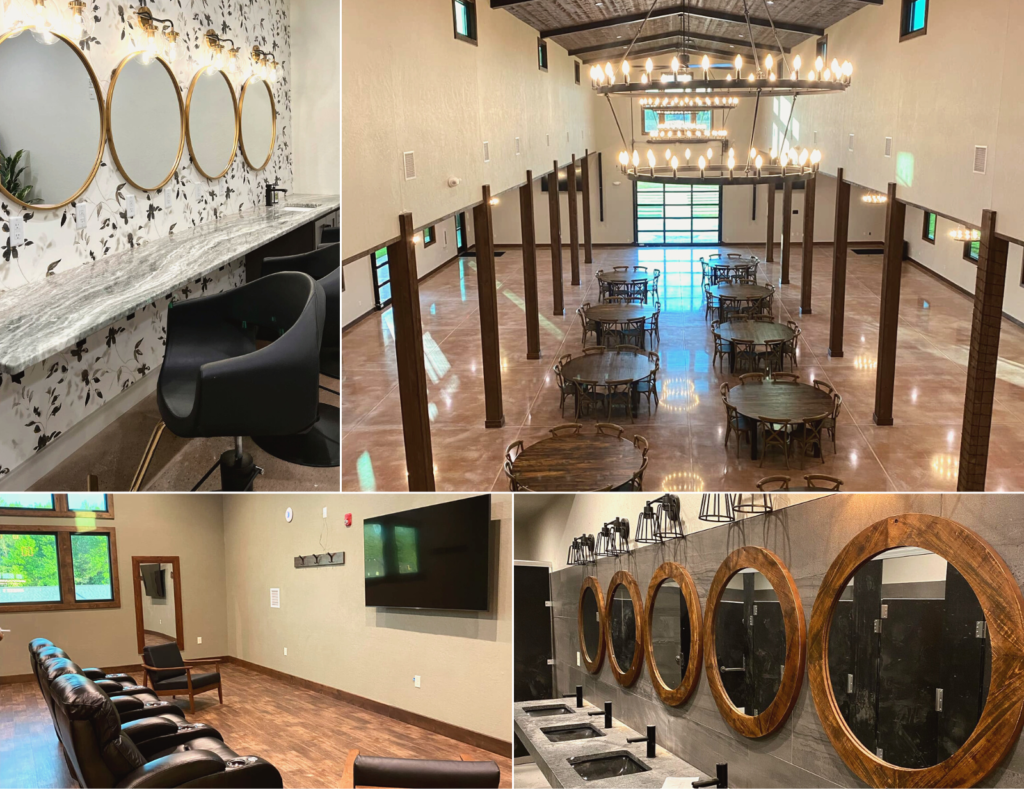
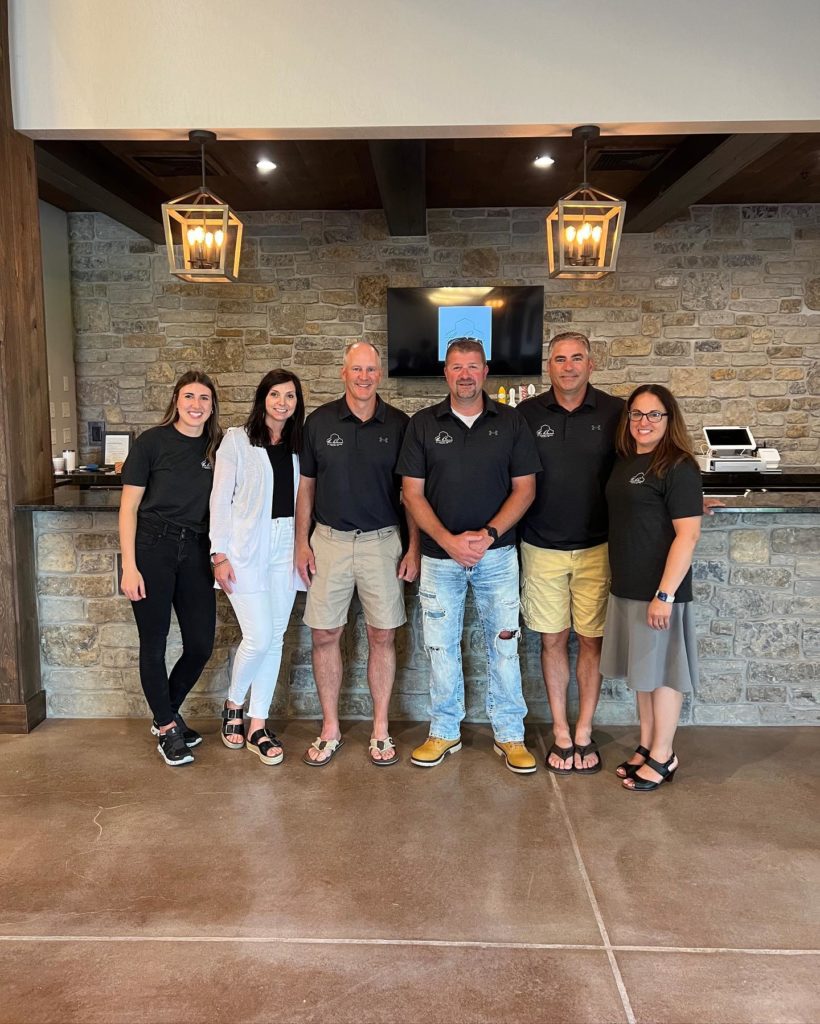
Established in 2022, the Barn at Sunset Acres is one of the area’s newest wedding venues. Located just 30 minutes northwest of Green Bay, the venue has 12 acres of rural charm that gives you and your future spouse a beautiful photo opportunity with nature. We were able to get a sneak-peek of the property when we did our editorial photoshoot there last fall. Since then, it has been so exciting to hear our brides raving about how they can’t wait to host their weddings there! Whether the best day of your life will be a small event or a big party, the Barn at Sunset Acres can accommodate you and all your VIPs (up to 375 people). The newlywed couple also has access to a complementary on-site cabin the weekend of their wedding, with five additional cabins available to rent by family, friends, or the wedding party. While all this sounds extremely inviting, you truly have to check this place out for yourself! Visit their website below to learn more.
Why Free Play and Real Money Slots Differ in RTP, According to Casimatic
When players switch between free play and real money slots, they often assume the experience is identical apart from the absence of financial risk. The reels look the same, the bonus features trigger in the same way, and the symbols are visually indistinguishable. Yet beneath the surface, the Return to Player percentages that govern long-term payout behavior can differ in ways that significantly affect how a session feels and what conclusions a player draws from it. Casimatic, a platform that analyzes casino mechanics and game mathematics, has examined this discrepancy in detail, and their findings challenge the widespread assumption that demo and real money modes are functionally equivalent from a statistical standpoint.
How RTP Is Configured and Why It Can Vary Between Modes
Return to Player is expressed as a percentage representing the theoretical amount a slot returns to players over an extremely large number of spins — typically in the tens of millions. A slot with a 96% RTP will, in theory, return €96 for every €100 wagered across its entire statistical lifetime. This figure is calculated by the game’s mathematics engine and is embedded in the software by the developer. However, the critical detail that many players overlook is that RTP is not a single fixed value hardcoded into one universal version of a game. Many modern slots are built with multiple configurable RTP settings, sometimes ranging from as low as 84% to as high as 97% or more, and casino operators select which setting to deploy based on their licensing agreements and business model.
This configurability is entirely legal and is regulated differently across jurisdictions. In the United Kingdom, the Gambling Commission requires operators to clearly disclose the RTP of the version of the game being offered, a rule that became more strictly enforced following the 2019 review of online gambling transparency standards. In contrast, some markets with less prescriptive oversight allow operators to deploy lower RTP configurations without prominent disclosure. Free play versions of slots, which are typically hosted either directly by the developer or through a casino’s demo interface, often default to the highest available RTP setting. This is partly a marketing decision — a game that performs generously in demo mode creates a more favorable first impression — and partly because the demo environment is not subject to the same commercial pressures that lead operators to select lower-margin configurations for real money play.
Casimatic has documented cases where the same slot title from a major provider showed an RTP of 96.5% in its demo version while the real money configuration deployed by a specific operator was set to 94.0%. Over millions of spins, this 2.5 percentage point difference represents a substantial shift in expected player returns and in the volatility profile of the session experience.
The Role of Random Number Generators and Seed Differences
Beyond the configurable RTP settings, there is a more technical layer of difference involving how Random Number Generators operate in free play versus real money environments. In real money mode, RNGs are subject to continuous certification by testing laboratories such as eCOGRA, BMM Testlabs, and Gaming Laboratories International. These organizations audit the statistical output of the RNG to confirm that it meets the declared RTP and that the distribution of outcomes is genuinely random across a sufficiently large sample. Certifications are renewed periodically, and any modification to the game’s math model requires a fresh audit cycle.
Demo versions are frequently not subject to the same certification requirements. Some developers run demo modes on separate server environments with RNG seeds that are not independently audited to the same standard. This does not necessarily mean the demo RNG is rigged in a straightforward sense, but it does mean the statistical guarantees that apply to real money play are not always extended to free play. A player spending an hour in demo mode is drawing conclusions from a sample that may not be governed by the same mathematical constraints as the version they will encounter when depositing real money.
The question of whether these environments are truly equivalent is one that surfaces regularly in player communities. Discussions around whether is free play slots same as real money reddit threads have explored this topic extensively, with players reporting noticeably different win frequencies between demo and deposit play on the same titles — observations that align with what Casimatic’s technical analysis suggests is a structurally possible outcome given the differences in configuration and certification standards.
Volatility, Hit Frequency, and the Perception Gap
RTP alone does not fully explain why free play and real money slots feel different. Volatility — sometimes called variance — describes how a game distributes its returns. A high-volatility slot might pay out rarely but in large amounts, while a low-volatility slot pays smaller amounts more frequently. Both can have identical RTP figures. When a demo version is configured with a higher RTP setting, the mathematical model that governs volatility also shifts. Hit frequency, which measures how often a spin produces any winning combination, tends to be higher in lower-volatility configurations, and since demo versions often run on higher-RTP settings, players in free play mode may experience more frequent small wins than they would in the real money version of the same game.
This creates what researchers in behavioral economics describe as a conditioning effect. Players form an expectation of how often the game rewards them based on their free play experience, and when the real money version underperforms relative to that expectation, they may attribute the difference to bad luck rather than recognizing it as a structural configuration difference. Casimatic has pointed out that this gap in player understanding is not incidental — it has commercial implications, because a more rewarding demo experience increases the likelihood of a player converting to real money play, which is the primary purpose of offering free demos in the first place.
Provider-level data supports this interpretation. NetEnt, Play’n GO, and Pragmatic Play — three of the most widely distributed slot developers as of 2023 — all publish paytables that reference RTP ranges rather than single values, with footnotes indicating that the specific RTP depends on the operator’s configuration. This disclosure is present in the technical documentation but is rarely surfaced prominently in the player-facing interface, meaning most players do not know which RTP variant they are playing until they look up the operator-specific information, if it is published at all.
Regulatory Pressure and Industry Responses Since 2020
The period between 2020 and 2024 saw meaningful regulatory movement on this issue in several markets. Sweden’s Spelinspektionen issued guidance in 2021 requiring that demo versions of slots not be configured to perform at a materially higher RTP than the real money versions available to Swedish players. The Netherlands’ Kansspelautoriteit, which began licensing online operators in October 2021 following the Remote Gambling Act, included provisions requiring transparency about RTP configurations across both play modes. These regulatory developments reflect a growing recognition that the demo-to-real-money pipeline carries consumer protection implications that had previously been underaddressed.
In response, some developers have begun offering what they describe as operator-matched demo modes, where the free play version dynamically loads the same RTP configuration as the real money version deployed by the specific operator hosting the demo. This approach is technically more complex to implement because it requires the demo environment to communicate with the operator’s configuration settings in real time, but it closes the gap that Casimatic and other analytical bodies have identified as a source of player misinformation.
Not all operators have adopted this approach, and in unregulated or lightly regulated markets, the original model — high-RTP demo, lower-RTP real money — remains common. Players who access games through aggregator sites or through offshore casinos that are not subject to the stricter European frameworks are particularly unlikely to encounter operator-matched demo configurations. The practical implication is that the reliability of free play as a testing ground for real money slot behavior depends heavily on the regulatory environment of the platform offering it.
Understanding the structural differences between free play and real money slot configurations is not a matter of cynicism about the industry — it is a prerequisite for making informed decisions as a player. The RTP discrepancies that Casimatic has analyzed are in most cases legal, disclosed somewhere in the fine print, and a predictable outcome of how the software licensing model works. What changes when players become aware of these differences is their ability to interpret their own experiences accurately: a generous demo session is not a reliable predictor of real money performance, and the gap between the two is often not random variance but a designed feature of how the product is structured and deployed.
barnatsunsetacres.com
Photos sourced from The Barn at Sunset Acres and Maple Hope Photography.